Maybe: A Versatile Handwritten Font for Creative Branding
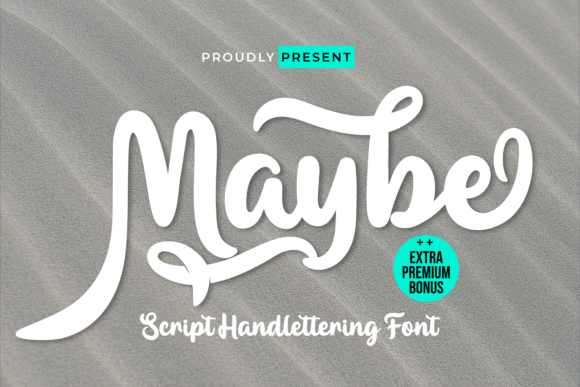
There’s a moment in every branding project where you open a blank brand board and feel the weight of the decision ahead. That’s when I first tested Maybe on a logo concept for a boutique identity project. It was a simple, clean layout with a need for warmth and approachability. Maybe—a sweet, brushed handwritten font—fit like a well-worn pair of jeans. Its cute flow and playful personality brought just the right amount of charm without overwhelming the design.
A Font with Personality
Maybe is more than just a font; it’s a character. With its soft, hand-drawn strokes and gentle curves, it carries a sense of intimacy and creativity. The brushwork gives it a natural, organic feel that feels both modern and nostalgic. It’s not too bold, not too subtle—it strikes a balance that makes it incredibly versatile.
What sets Maybe apart is its PUA encoding, which allows access to all glyphs and special characters. This is a huge plus for designers who need flexibility in their typography choices. Whether you’re working on a social media graphic or a product label, the ability to customize and extend the font’s character set adds a layer of creativity and professionalism.
Testing Maybe in Real Projects
I used Maybe across several design assets during a recent café visual refresh. On the logo, it added a friendly, inviting vibe that matched the café’s cozy atmosphere. When placed on packaging mockups, it felt warm and approachable, making the products feel more personal. Even on business cards, it maintained its charm without sacrificing readability.
One of my favorite applications was on a website header. The font’s soft curves gave the site a welcoming feel, while its legibility at larger sizes made it suitable for headlines. However, I noticed that at smaller sizes, the brushwork could become less crisp. This is something to keep in mind if you’re using Maybe for body text or long-form content.
For social media graphics, Maybe worked exceptionally well as an accent font. It added a touch of personality to Instagram posts and Facebook banners without overpowering the design. Pairing it with a sans serif font like Montserrat created a nice contrast that balanced the playful with the professional.
Font Pairing and Design Applications
When pairing Maybe, I found that it works best with fonts that complement its handcrafted feel. A clean sans serif like Montserrat or a classic serif like Playfair Display can help anchor the design and provide contrast. For a more cohesive look, I’ve also paired it with other script fonts, though I recommend keeping the rest of the typeface family consistent to maintain visual harmony.
Maybe is particularly well-suited for short phrases, headlines, and decorative elements. It’s not ideal for long body text or formal corporate use due to its casual nature. However, for creative studios, handmade shops, and small businesses looking to stand out, Maybe offers a unique opportunity to express personality through typography.
Practical Considerations and Licensing
Before using Maybe in client work, I always check the commercial licensing terms. It’s important to ensure that the font is appropriate for the intended use, whether it’s for print-on-demand products, digital assets, or branded merchandise. Always review the included styles, alternates, ligatures, swashes, weights, and multilingual support to make sure it meets your project’s needs.
Additionally, I recommend testing Maybe in different contexts before finalizing its use. How does it look on a shop sign? Does it hold up in a hero section of a homepage? Does it maintain its charm when scaled down? These are all practical questions that can help you make informed decisions about its application.
Ultimately, Maybe is a premium font that brings a unique aesthetic to any project. Whether you're designing a logo, creating social media graphics, or refreshing a brand identity, it has the versatility and charm to make your work stand out. Just remember to use it wisely—where it fits best—and always respect its licensing terms.